
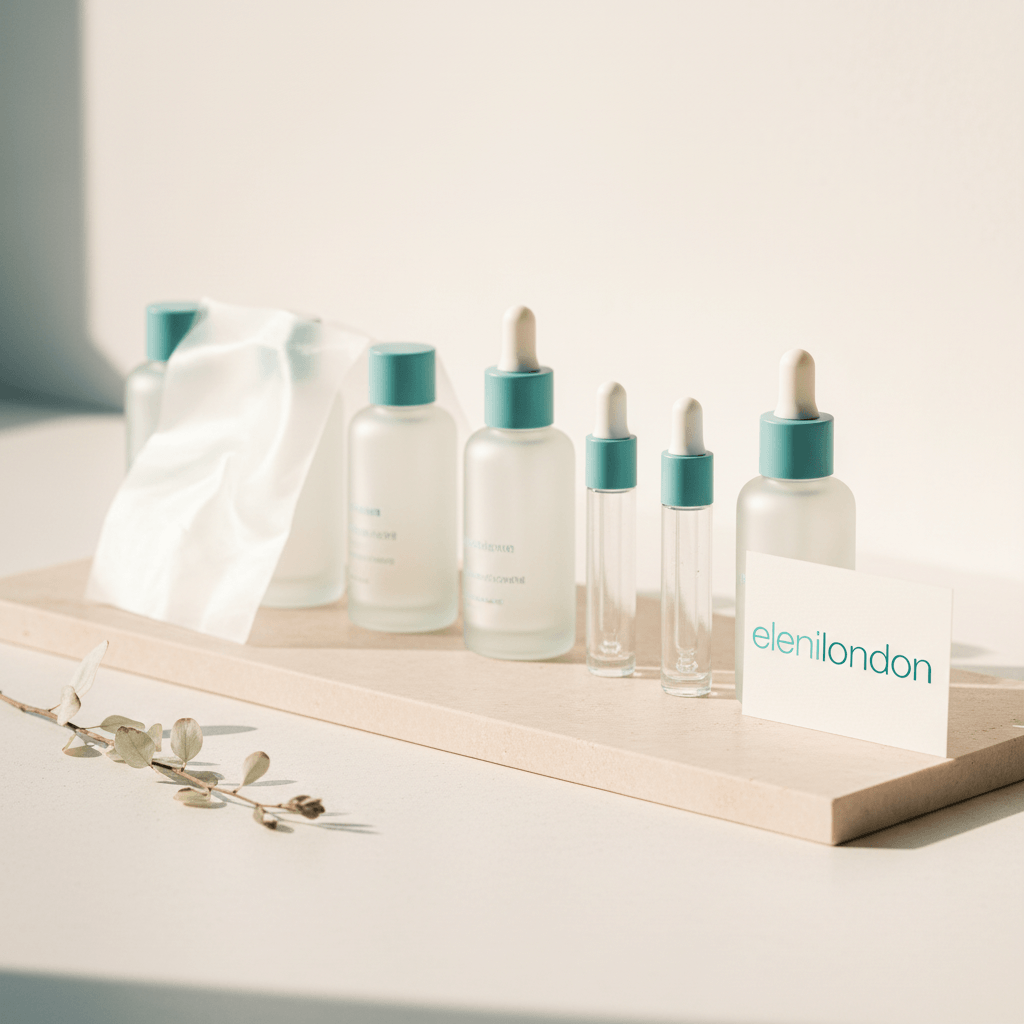
Most people own a collection of skincare products that sit in a particular order on their bathroom shelf. Whether that order is intentional or not is another matter entirely. Applying the wrong product first, or layering two formulas that actively conflict with each other, can render even the most premium ingredients completely ineffective. If you have ever wondered why your skincare routine does not seem to be producing the results it should, the answer may lie less in what you are using and more in how you are using it.
At Eleni London Skin Care and Aesthetics, we have spent over four decades working with clients at every stage of their skin journey. One of the most consistent observations we make during consultations is that product layering is widely misunderstood. This guide addresses that gap directly.
Why the Order You Apply Products Matters
Skin acts as a selective barrier. It does not simply absorb everything placed on its surface in equal measure. The molecular weight of an ingredient, the pH of a formula, and the consistency of a product all determine how deeply it penetrates and how well it performs.
The foundational principle is straightforward: apply products from the thinnest consistency to the thickest. This ensures that lightweight, active formulas reach the deeper layers of the skin before heavier creams and oils create a seal over the surface.
When you reverse this order, you effectively lock lighter products out. A serum applied over a rich moisturiser, for example, will largely sit on top of the skin rather than absorbing into it. You may not notice the issue immediately, but over weeks and months the cumulative effect is a routine that underperforms.
The Correct Layering Sequence
Understanding the general sequence is the starting point for building a more effective routine.
Cleanser forms the essential first step. All subsequent products depend on a clean surface. We recommend a cleanser appropriate to your skin type, whether that is a gel formula for oilier skin or a cream-based option for those experiencing dryness or sensitivity.
Toner or essence comes next. These products are often misunderstood. A well-formulated toner balances the skin's pH following cleansing and prepares it to receive active ingredients more effectively. Essence products, which tend to be more hydrating, serve a similar preparatory role.
Serums and targeted treatments represent the most active layer of any routine. These are your vitamin C formulas, hyaluronic acid serums, retinol treatments, and any other concentrated actives. Because they are typically water-based and light in consistency, they absorb readily into cleansed, prepped skin. This is the layer where the most meaningful skin-change work takes place.
Eye cream is worth applying at this point in the sequence. The skin around the eye area is considerably thinner than the rest of the face and benefits from targeted formulas designed specifically for that zone.
Moisturiser seals in the layers beneath it while delivering hydration. This is where consistency becomes particularly important. A richer cream will create a more occlusive finish than a lightweight gel moisturiser, which may suit those with drier or more mature skin.
SPF is the non-negotiable final step in any morning routine. It should always be applied last and never mixed with a moisturiser, as diluting the formula compromises its protective efficacy. In an evening routine, SPF is replaced by any richer overnight treatment or facial oil you may use.
Navigating Active Ingredients
Where skincare layering becomes more nuanced is in the management of active ingredients. Not all actives work well together, and some combinations can cause irritation, sensitivity, or simply cancel each other out.
Vitamin C and retinol should not be used at the same time. Vitamin C is best suited to morning routines where it provides antioxidant protection alongside SPF. Retinol, which increases photosensitivity, belongs in your evening routine.
AHAs, BHAs, and retinol are another combination to avoid layering simultaneously. Both are exfoliating or cell-renewal actives, and using them together significantly increases the risk of barrier disruption and irritation, particularly for those with sensitive skin.
Niacinamide is one of the more versatile actives and works well alongside most other ingredients. It is worth noting, however, that pairing it with high-concentration vitamin C can sometimes reduce the efficacy of both. Separating them into morning and evening routines is a practical solution.
Hyaluronic acid is compatible with almost everything and benefits from being applied to slightly damp skin. The ingredient works by drawing moisture from the environment into the skin, so giving it something to work with at the point of application makes a measurable difference.
The Case for Personalised Guidance
General layering principles provide a useful foundation, but skin is individual. Factors including age, hormonal fluctuations, lifestyle, climate, and existing skin conditions all influence how your skin responds to specific formulas and combinations. What works reliably for one person may prove irritating or insufficient for another.
This is the position from which we approach every client at Eleni London Skin Care and Aesthetics. A personalised consultation allows us to assess your skin's specific characteristics, identify any concerns, and recommend a routine that is genuinely suited to you rather than modelled on broad generalisations. Our product range is vegan, cruelty-free, and clinically tested, developed with the same philosophy of precision and personalisation that underpins our clinic treatments.
If your current routine is not delivering the results you expect, or if you are simply unsure whether you are using your products in the most effective way, a professional assessment is the most reliable next step.
Visit us at Eleni London Skin Care and Aesthetics to explore our treatments and skincare range, or to book a consultation at our Northcote Road clinic in Battersea. We are here to help you get the most from your skincare, at every stage of life.