
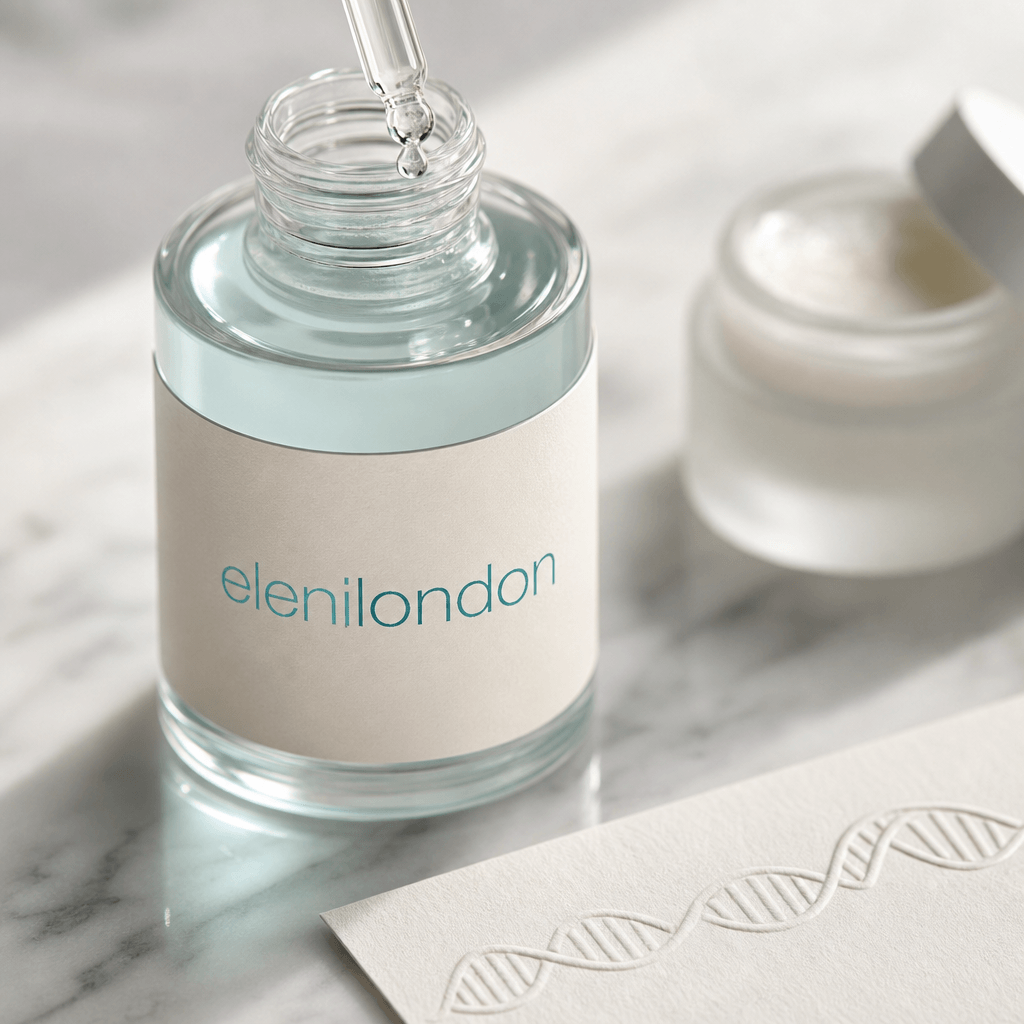
Firm, smooth skin does not happen by accident. Behind every well-structured complexion is a network of proteins working constantly beneath the surface, and when that network begins to weaken, the signs show up in ways that are impossible to ignore. Fine lines deepen, skin loses its bounce, and what once felt taut starts to feel slack. If you have ever wondered why certain skincare ingredients genuinely work while others amount to little more than moisturising your wallet, peptides are worth understanding properly.
What Peptides Actually Are
Peptides are short chains of amino acids, the same building blocks that make up proteins. In the context of skin, the protein that matters most is collagen, which forms the structural scaffolding responsible for firmness and elasticity. Collagen is itself made up of long chains of amino acids, and when it breaks down through ageing, UV exposure, or environmental stress, fragments of those chains (peptides) are released.
Here is where the science becomes genuinely interesting. The skin interprets those fragments as a signal that structural damage has occurred, which prompts it to increase collagen production in response. Topical peptides, applied through serums and creams, work by mimicking these naturally occurring signals. They communicate with skin cells directly, encouraging repair and regeneration without the need for invasive procedures.
This is not a vague wellness concept. It is a measurable, biological mechanism backed by decades of dermatological research.
The Different Types of Peptides in Skincare
Not all peptides do the same job, and understanding the distinctions helps you make more informed choices about what you apply to your skin.
Signal peptides are perhaps the most studied category. These work by stimulating fibroblast cells (the cells responsible for producing collagen and elastin) to ramp up production. Palmitoyl pentapeptide-4, often listed on ingredient labels as Matrixyl, is one of the most widely researched examples and has been shown in clinical studies to visibly reduce wrinkle depth over consistent use.
Carrier peptides work differently. Rather than sending signals, they deliver trace minerals such as copper and manganese to the skin, both of which play a supporting role in collagen synthesis and wound healing. Copper peptides, in particular, have attracted significant attention for their ability to support skin repair and improve texture over time.
Neurotransmitter-inhibiting peptides take a third approach. These target the facial muscle contractions that, over years, etch expression lines into the skin. Argireline is a commonly cited example, sometimes described informally as a topical alternative to muscle-relaxing injectable treatments, though the mechanism and depth of effect differ considerably.
Enzyme-inhibiting peptides work by slowing down the activity of enzymes responsible for breaking down collagen. By protecting existing collagen rather than just encouraging new production, these peptides help maintain what is already there, which becomes increasingly valuable as the skin's natural regenerative capacity slows with age.
Why Peptides Suit Mature and Ageing Skin Particularly Well
Collagen production begins to decline from the mid-twenties onward, dropping at a rate of roughly 1% per year. By the time most people reach their forties or fifties, the cumulative effect is visible. The structural loss is compounded by reduced cell turnover, slower wound healing, and decreasing levels of other supportive proteins such as elastin and hyaluronic acid.
This is precisely why an age-appropriate approach to skincare matters. A formula suited to skin in its twenties is unlikely to address the needs of skin in its fifties. Peptides occupy a particularly useful position in mature skincare because they work with the skin's existing communication systems rather than overwhelming or stripping the skin. They are generally well-tolerated, even on sensitive skin, and do not carry the photosensitivity risks associated with some other active ingredients such as retinoids.
For anyone at the stage of life where prevention is shifting into active repair, incorporating peptides consistently is one of the more evidence-based decisions you can make.
How to Incorporate Peptides Effectively
The effectiveness of peptides depends heavily on formulation, concentration, and the other ingredients they are paired with. A few principles are worth keeping in mind.
Peptides are best applied in leave-on products rather than cleansers, where contact time is too brief for any meaningful absorption. Serums and moisturisers are the most effective delivery formats. Look for products where peptides appear in the upper half of the ingredient list, which indicates a meaningful concentration rather than a token inclusion.
Peptides work well alongside hyaluronic acid (which hydrates and plumps the skin, creating an environment where collagen-building can occur more efficiently) and niacinamide (which supports the skin barrier and reduces inflammation). They are generally compatible with most active ingredients, though it is worth noting that certain formulations combining peptides with vitamin C at low pH levels can reduce peptide stability, so layering order matters.
Consistency is non-negotiable. Unlike some ingredients that produce rapid visible changes, peptides work gradually. Clinical improvements in firmness and wrinkle depth typically emerge after eight to twelve weeks of regular use, and the results build cumulatively over time.
Building a Routine That Actually Works
Understanding an ingredient is one thing. Knowing how to use it in the context of your specific skin type, age, and concerns is another matter entirely. Generic skincare advice has its limits, and the difference between a routine that produces real results and one that amounts to expensive guesswork often comes down to personalisation.
At Eleni London Skin Care and Aesthetics, we have been working with clients at every life stage since 1982, and our approach has always been built around the same conviction: that effective skincare must be tailored, not templated. Our product range is formulated in the UK to the highest standards, vegan and cruelty-free, and developed specifically to support the skin through the stages where it needs targeted, intelligent care.
Whether you are looking to understand which peptide-based products are suited to your skin or you want to explore a more complete treatment plan, our team at the Northcote Road clinic is here to provide the guidance that generic advice simply cannot replicate. Visit elenilondon.com to learn more about our treatments, our skincare range, and how we can help you build a routine grounded in science and shaped around you.